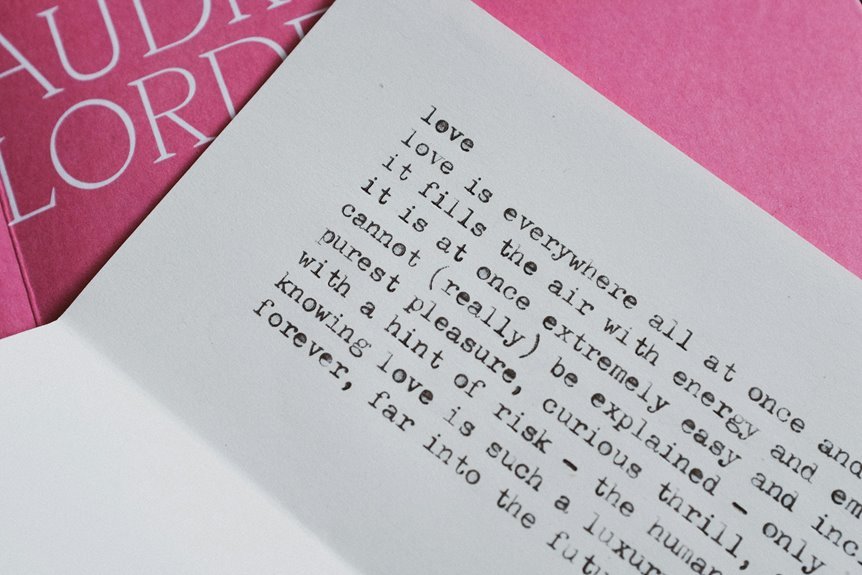
Romantic poetry arose as a significant counter to neoclassical constraints, prioritizing emotional depth and individual experience. This movement, shaped by the political upheavals of its time, sought to explore the complexities of human existence through nature and imagination. Key poets like Wordsworth, Coleridge, and Keats emerged, each contributing uniquely to this evolving landscape. Their works invite an exploration of beauty and the sublime, raising questions about the enduring relevance of these themes today.
Key Takeaways
- Romantic poetry emerged in the late 18th century, influenced by Enlightenment ideals and a reaction against neoclassical constraints.
- Key themes include the interconnectedness of nature and emotion, individualism, and the complexities of the human condition.
- Major poets like Wordsworth, Coleridge, Keats, and Shelley reshaped literary expression through their focus on nature and personal experience.
- Nature plays a central role, symbolizing emotions and experiences, such as strength, change, and turmoil.
- The legacy of Romantic poetry includes a lasting impact on individualism, emotional depth, and connections with nature, influencing modern literature and culture.
The Origins of Romantic Poetry
Although the Romantic poetry movement emerged in the late 18th century, its roots can be traced back to earlier literary traditions that emphasized emotion and individualism. Influenced by the Enlightenment and the burgeoning sense of personal freedom, Romantic poets sought to break away from the constraints of neoclassical ideals. Historical context further shaped this evolution, as the tumult of the Industrial Revolution and the political upheavals of the time fostered a longing for nature and the sublime. Literary influences from the Gothic tradition and the works of earlier poets, such as William Blake and John Milton, provided a fertile ground for the Romantic ethos. Together, these elements contributed to a powerful reimagining of poetry that celebrated human experience and the natural world.
Key Themes in Romantic Poetry
Key themes in Romantic poetry prominently feature the interconnectedness of nature and emotion, as poets often portray the natural world as a reflection of human feelings. Additionally, the emphasis on individualism and imagination serves to highlight the unique perspectives and inner experiences of the poet. Through these themes, Romantic poetry articulates a profound response to the complexities of existence and the human condition.
Nature and Emotion
While the Romantic poets often celebrated the beauty of the natural world, they simultaneously used nature as a conduit for deep emotional exploration. Their works reveal an intricate relationship between nature’s beauty and emotional depth, reflecting the human experience in profound ways.
- Nature as Reflection: Natural landscapes often mirror the inner turmoil or joy of the speaker.
- Symbolic Elements: Specific elements, like a stormy sky or a tranquil lake, symbolize emotional states—chaos or serenity.
- Transcendental Connections: Nature serves as a bridge to the sublime, where the sublime evokes feelings of awe, longing, and introspection.
Through these themes, Romantic poets illustrate how nature’s beauty is intertwined with the complexities of human emotion, inviting readers to explore their own feelings in response to the world around them.
Individualism and Imagination
Romantic poetry is distinguished by its emphasis on individualism and imagination, reflecting a significant departure from the collective norms of previous literary movements. This genre celebrates individualistic expression, where poets assert personal experiences and emotions as vital sources of inspiration. Imaginative landscapes serve as metaphors for the inner workings of the mind, allowing poets to transcend the limitations of reality. The Romantic emphasis on self-discovery encourages readers to explore their own identities, fostering a sense of autonomy. Through vivid imagery and emotive language, these poets create spaces where personal freedom and creativity flourish. Ultimately, Romantic poetry champions the power of the individual spirit, urging a profound connection between the self and the boundless realms of imagination.
Major Poets of the Romantic Era
The Romantic Era produced a cadre of poets whose innovative works reshaped literary expression and thematic exploration. Key figures such as William Wordsworth, Samuel Taylor Coleridge, and John Keats not only captured the essence of human emotion but also reflected the era’s philosophical undercurrents. By examining their influential works, one can better understand the distinctive styles and recurring themes that characterize this transformative period in poetry.
Key Figures Overview
As the Industrial Revolution transformed society, a group of poets emerged during the late 18th and early 19th centuries, reshaping the landscape of literature with their profound exploration of emotion, nature, and individualism. Key figures in this movement left indelible marks on Romantic aesthetics through their innovative use of poetic devices:
- William Wordsworth: Celebrated for his emphasis on nature and the sublime, he championed the ordinary man’s voice.
- Samuel Taylor Coleridge: Known for his imaginative narratives and exploration of the supernatural, he infused Romantic poetry with deep emotional resonance.
- John Keats: His focus on beauty and sensory experience exemplified the Romantic ideal of individual perception and desire.
Together, these poets forged a legacy that continues to inspire and resonate with those who seek freedom in artistic expression.
Influential Works Highlighted
Amidst the tumult of societal change, several seminal works by major poets of the Romantic era emerged, each reflecting the core themes of emotion, nature, and individualism. Notable figures such as William Wordsworth and Samuel Taylor Coleridge employed innovative poetic devices, such as vivid imagery and lyrical language, to evoke deep emotional responses. Their collaborative work, “Lyrical Ballads,” became a cornerstone of Romantic literature, emphasizing the beauty of the natural world and the significance of personal experience. Similarly, Percy Bysshe Shelley and John Keats drew inspiration from historical context, exploring themes of transcendence and mortality. These poets not only challenged conventional norms but also paved the way for future literary movements, highlighting the enduring quest for artistic freedom and self-expression.
Themes and Styles Explored
Romantic poetry is characterized by a rich tapestry of themes and styles that reflect both the inner emotional landscape of the individual and the grandeur of the natural world. Major poets of the Romantic era embraced a range of expressions, often weaving together profound ideas through:
- Nature’s Majesty: Poets utilized symbolic imagery to evoke the sublime beauty of the natural environment, serving as a backdrop for personal reflection.
- Emotional Depth: Passionate expression permeated their work, enabling an exploration of intense feelings such as love, despair, and longing.
- Individualism: The focus on the self and the subjective experience often led to a rejection of societal norms, celebrating personal freedom and creative authenticity.
These elements combined to create a distinctive voice that resonated deeply with the human experience.
The Influence of Nature in Romantic Works
Nature serves as a profound and multifaceted influence in the works of Romantic poets, shaping their emotional landscapes and thematic explorations. The interplay of nature symbolism and natural imagery allows poets to convey complex feelings and ideas, often reflecting humanity’s intrinsic connection to the natural world. Through vivid depictions of landscapes, flora, and fauna, Romantic poets evoke a sense of freedom, beauty, and transcendence.
| Element | Symbolism | Poetic Example |
|---|---|---|
| Mountains | Strength and Stability | Wordsworth’s “Tintern Abbey” |
| Rivers | Change and Continuity | Coleridge’s “The Rime of the Ancient Mariner” |
| Flowers | Beauty and Ephemerality | Keats’ “Ode to a Nightingale” |
| Storms | Turmoil and Passion | Byron’s “Childe Harold’s Pilgrimage” |
The Role of Emotion and Imagination
Although often intertwined, emotion and imagination emerge as distinct yet complementary forces in the works of Romantic poets, driving their creative expression and thematic depth. These poets harnessed emotional expression to explore the internal landscape of the human experience, while imagination allowed them to transcend reality, creating vivid and transformative worlds.
- Emotional Authenticity: Poets like Wordsworth and Coleridge articulated profound feelings, allowing readers to connect with their inner selves.
- Imaginative Landscapes: The creation of fantastical settings provided a backdrop for emotional exploration, exemplified in Keats’s lush imagery.
- Fusion of Experience: The interplay between emotion and imagination invites readers to reflect on their own lives, fostering a sense of freedom and self-discovery.
Together, these elements form the essence of Romantic poetry, illuminating the complexities of the human spirit.
Romantic Poetry’s Impact on Literature
The profound influence of Romantic poetry on the literary landscape can be observed through its innovative approaches to form, theme, and subject matter. This movement heralded a shift towards individualism and emotional depth, challenging the rigid conventions of preceding eras. The romantic influence fostered a greater appreciation for nature, personal experience, and the exploration of the human psyche, reshaping literary norms. Furthermore, it paved the way for the literary evolution that followed, inspiring subsequent movements like Modernism and Symbolism. As poets such as Wordsworth and Coleridge broke free from traditional structures, they encouraged writers to embrace spontaneity and authenticity. Thus, Romantic poetry not only transformed its own era but also laid the groundwork for future generations, emphasizing the vital connection between creativity and freedom.
Analyzing Famous Romantic Poems
Romantic poetry serves as a rich tapestry of emotional intensity and imaginative exploration, with each poem revealing the unique worldview of its author. Analyzing these works provides insight into their profound themes and metaphysical connections.
- Nature’s Influence: Many poets use natural imagery to evoke feelings of beauty and transcendence, illustrating the bond between humanity and the natural world.
- Emotional Depth: Poetic devices such as metaphors and similes enhance the exploration of love, loss, and longing, inviting readers to delve into the human experience.
- Individualism: The emphasis on personal perspective and individuality reflects a quest for freedom, allowing poets to express their innermost thoughts and feelings authentically.
Through these elements, Romantic poetry continues to resonate, inviting contemplation and connection.
The Legacy of Romantic Poetry Today
While the Romantic poets emerged in a specific historical context, their influence permeates contemporary literature and cultural expressions, serving as a foundation for modern emotional and aesthetic sensibilities. The legacy of Romantic poetry is evident in modern interpretations that prioritize individual experience, nature, and emotional depth. Writers and artists today often draw upon romantic influences to explore themes of identity, freedom, and introspection, reflecting a desire to connect with the self and the natural world. This enduring impact can be seen in various genres, from contemporary poetry to popular music, where the celebration of personal emotion and the sublime continues to resonate. Thus, the Romantic ethos remains vital, shaping how individuals express their innermost thoughts and feelings in an increasingly complex world.
Frequently Asked Questions
How Did Romantic Poetry Influence Modern Songwriting?
The influence of earlier lyrical themes and emotional expression on modern songwriting is profound. Contemporary artists often draw from these elements, crafting songs that resonate deeply with listeners, emphasizing personal experiences and universal feelings.
What Are the Best-Known Romantic Poetry Anthologies?
In the vast ocean of literature, key anthologies such as “The Oxford Book of Romantic Verse” and “The Norton Anthology of Poetry” feature notable poets like Wordsworth and Keats, showcasing timeless themes of nature and emotion.
Were There Any Female Poets in the Romantic Era?
The Romantic era featured notable female contributions, with underrated poets like Felicia Hemans and Charlotte Smith. Their works, often overlooked, reveal profound insights into nature and emotion, challenging contemporary norms and enriching the literary landscape of their time.
How Did Romantic Poetry Address Social Issues of Its Time?
During a period when over 60% of the population sought social justice, poetry emerged as a poetic revolution, addressing issues like inequality and oppression, thus igniting a dialogue that transcended mere aesthetics, shaping societal consciousness.
What Are Common Misconceptions About Romantic Poetry?
Common misconceptions about this genre often revolve around its misunderstood themes, reducing its emotional depth to mere sentimentality. Critics frequently overlook the complex interplay of nature, individuality, and societal critique embedded within its expressive language and imagery.
Conclusion
In juxtaposing the fervent emotionalism of Romantic poetry with the restrained rationality of neoclassicism, one can perceive the profound shift in human experience and expression. This genre, fueled by the sublime beauty of nature and the depths of individual sentiment, not only critiques its predecessors but also lays the groundwork for modern literature. Ultimately, Romantic poetry’s celebration of the human spirit and its intricate relationship with the natural world endures, echoing the timeless struggle between reason and emotion.